VERMICULITE SPECIFICATIONS

Safety Data sheet
Technical Specification: Crude & Exfoliated Vermiculite
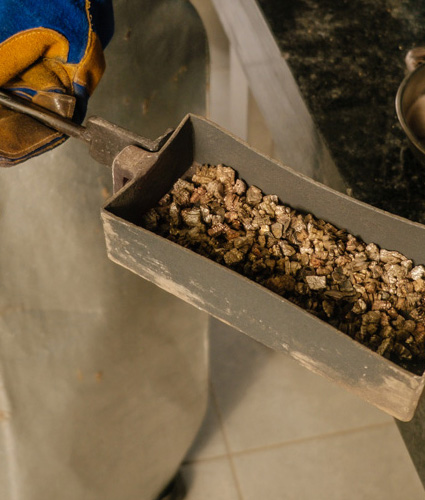
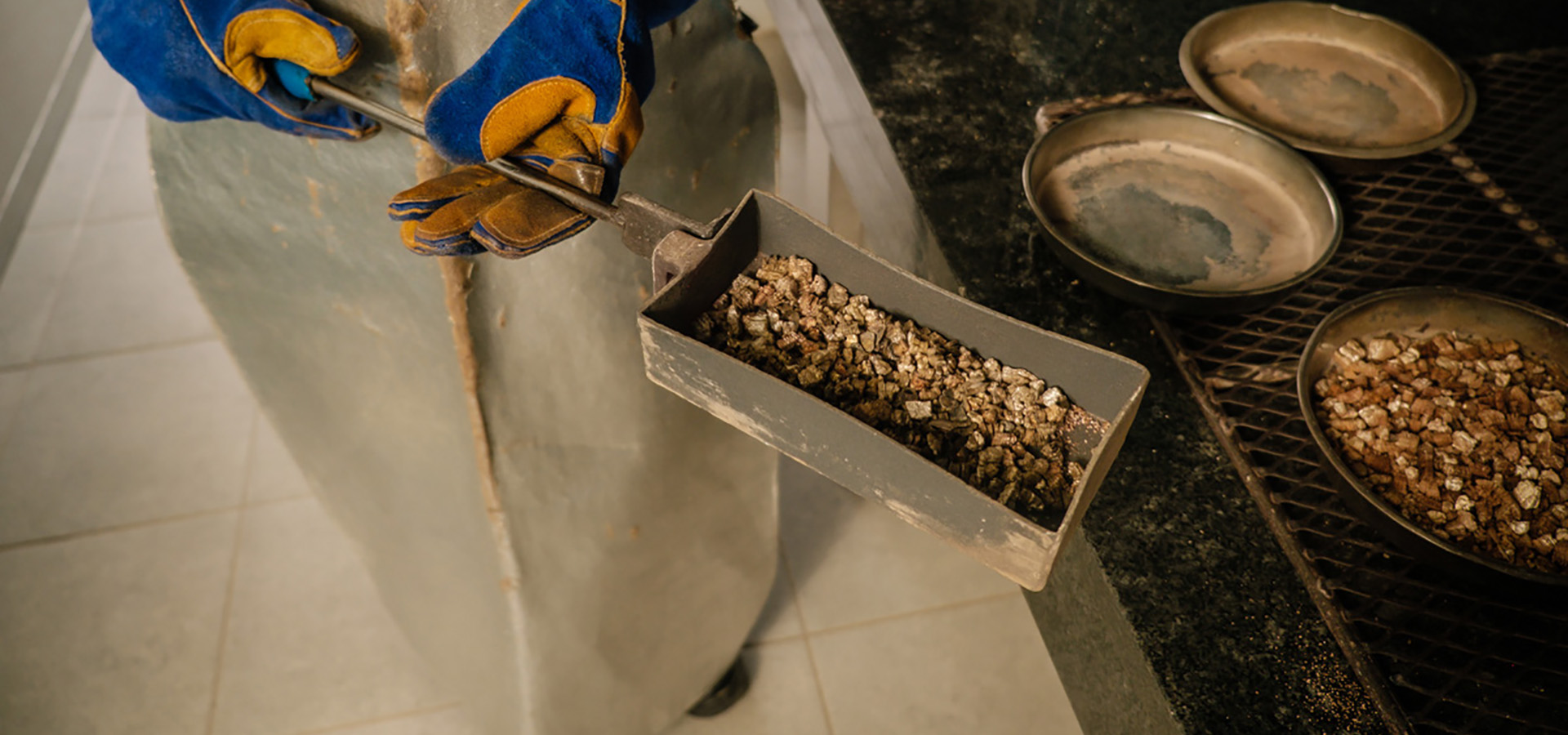
Crude vermiculite from the Palabora mine consists of golden/brown flakes which are carefully classified into different grades – each with a specified range of particle sizes, as detailed in the table below. Vermiculite is most widely used in its exfoliated form. The concertina-shaped granules of exfoliated vermiculite are non-combustible as well as being insoluble in water and all organic solvents. Completely safe and easy to handle, exfoliated vermiculite is available in different grades.
| Palabora Vermiculite: Typical Specification | |||||
|---|---|---|---|---|---|
| Vermiculite | Crude Vermiculite | Exfoliated Vermiculite | |||
| No | Grade | (1) Size (mm) | (2) Density (kg/m3) | (3) Yield (m3) | (4) Density (kg/m3) |
| 4 | Large | – 8.0 + 2.8 | 700 – 850 | 12.0 – 14.5 | 60 – 75 |
| 3 | Medium | – 4.0 + 1.4 | 800 – 950 | 10.0 – 13.0 | 70 – 85 |
| 2 | Fine | – 2.0 + 0.71 | 850 – 1050 | 8.0 – 11.5 | 75 – 85 |
| 1 | Superfine | – 1.0 + 0.355 | 850 – 1050 | 7.0 – 10.0 | 85 – 100 |
| 0 | Micron | – 0.71 + 0.25 | 850 – 1050 | 6.0 – 9.0 | 105 – 135 |
| Supermicro | 1.0 + 0.25 | 850 – 1050 | 6.2 – 9.0 | 90 – 135 | |
| RSU | – 0.5 + 0.18 | 850 – 1050 | 3.0 – 5.0 | 115 – 150 | |
| DDM | – 0.1 + 0.0 | 1250 – 1550 | 2.0 – 2.5 | 350 – 400 | |
| Notes: (1) Particle size distribution minimum 80% retained (mm). (2) Loose bulk density of product (kg/m3). (3) Typical volume yields (cubic metres of exfoliated vermiculite) per tonne of crude vermiculite processed (m3). (4) Typical loose bulk density of product (kg/m3).. The typical loose bulk densities and volume yields for exfoliated vermiculite produced in the table above are values obtained by commercial operation of an S.S.T. Rotary Exfoliator. These values may vary slightly depending on the type of furnace used, the efficiency of the production system and on the feed rate of the crude vermiculite into the furnace. |
|||||
Chemical Analysis: Crude & Exfoliated Vermiculite
When analysed chemically, crude and exfoliated vermiculite give the same values. Because vermiculite is a naturally occurring substance its exact composition may vary from sample to sample.
| Typical Ranges for Major Components | ||
|---|---|---|
| SiO2 | Silicon Dioxide | 35 – 41% |
| Al2O3 | Aluminium Oxide | 6.0 – 9.5% |
| Fe2O3 | Iron Oxide | 6.0 – 9.5% |
| MgO | Magnesium Oxide | 21.5 – 25.5% |
| K2O | Potassium Oxide | 3 – 6% |
| Typical Ranges for Minor Components | ||
|---|---|---|
| CaO | Calcium Oxide | 2.0 – 6.0% |
| CO2 | Carbon Dioxide | 0.6 – 2.5% |
| TiO2 | Titanium Dioxide | 0.6 – 1.4% |
| F | Fluorine | 0.2 – 0.8% |
| Cr2O3 | Chrome Oxide | 0.01 – 0.15% |
| P2O5 | Phosphorus Pentoxide | 0.2 – 2.0% |
| Cl | Chlorine | 0 – 0.5% |
Specific Surface Area: Exfoliated Vermiculite
The specific surface area for exfoliated vermiculite, as measured by the nitrogen absorption technique, is typically:
| Exfoliated vermiculite | |||||
|---|---|---|---|---|---|
| No | Grade | M2/g | No | Name | M2/g> |
| 4 | Large | 3.4 | Supermicro | 6.0 * | |
| 3 | Medium | 4.0 | RSU | 7.2 | |
| 2 | Fine | 4.4 | DDM | 7.5 | |
| 1 | Superfine | 5.4 | |||
| 0 | Micron | 6.4 | |||
* Not determined by nitrogen absorption but calculated from Superfine and Micron values.
Absorption Capacity: Exfoliated Vermiculite
All grades of exfoliated vermiculite will retain liquids within the inter-laminar voids of the individual particles as well as between the particles themselves.
This table gives an indication of the quantity of liquid which can be retained using Superfine grade vermiculite before drainage of the liquid occurs.
| Liquid | Volume of Liquid Absorbed in 1 Litre of Vermiculite (ml) | ||||||
|---|---|---|---|---|---|---|---|
| DDM | RSU | Micron | Superfine | Fine | Medium | Large | |
| Water | 517 | 457 | 406 | 310 | 280 | ||
| Diesel Oil | 454 | 335 | 273 | 213 | 183 | ||
| Heavy Gear Oil | 488 | 411 | 353 | 268 | 174 | ||
| 15/40 Multigrade Oil | 543 | 356 | 350 | 262 | 193 | ||
| Note: (a) Diesel oil used in the test is 35 second gas oil, which is very similar to paraffin. (b) 15/40 Multigrade oil is oil that meets certain low-temperature and high-temperature requirements simultaneously and is commonly used as engine oil. (c) Absorption is related to surface area of the particle and the finer grades have, on a volume basis, more surface area than the coarser grades (i.e. Large Grade). |
|||||||
Other Supporting Technical Data: Crude Vermiculite
| Angle of Repose | This varies from 38º to 26º according to grade |
| Melting Point | Collapse and coalescence of the individual flakes begins at 1330ºC |
| Specific Heat | 1.03 kJ/kg.K. at 20ºC 1.05 kJ/kg.K. at 30ºC |
| Specific Gravity | 2.5 to 2.6 depending on grade |
| Mohs Hardness | Between 1 & 2 |
| pH Value | Crude Vermiculite: 8.5 to 10 |
| Weight Loss | At 105ºC – 4.5 to 6.5% At 950ºC – 8.0 to 10.0% Note: (a) At the lower temperature all the weight loss will be water. (b) At the higher temperature most of the weight loss will be water but some will be volatile components such as carbon dioxide. |
| Aspect Ratio: Ratio of flake diameter to flake thickness | As received, this varies from 7:1 to 30:1 depending on grade. Mechanical processing can produce aspect ratios of 50:1. Chemical and mechanical processing can produce ratios of 200:1. Note: The higher the aspect ratio the thinner the vermiculite flake. |
| Cation Exchange | The exchangeable cation normally present in vermiculite is Magnesium. The cation exchange capacity of Palabora Vermiculite is up to 600 milliequivalents per kg. The rate of cation exchange will depend on exposed surface area; therefore, the best results are obtained using exfoliated vermiculite. |
Disclaimer: The details contained in this document are provided as a source of information and for guidance only. Whilst every effort is made to ensure the content is accurate and up to date, use of the information contained in this document is solely at the discretion, risk and liability of the recipients.
Click here to contact us for more information on this product.
